

Introduction
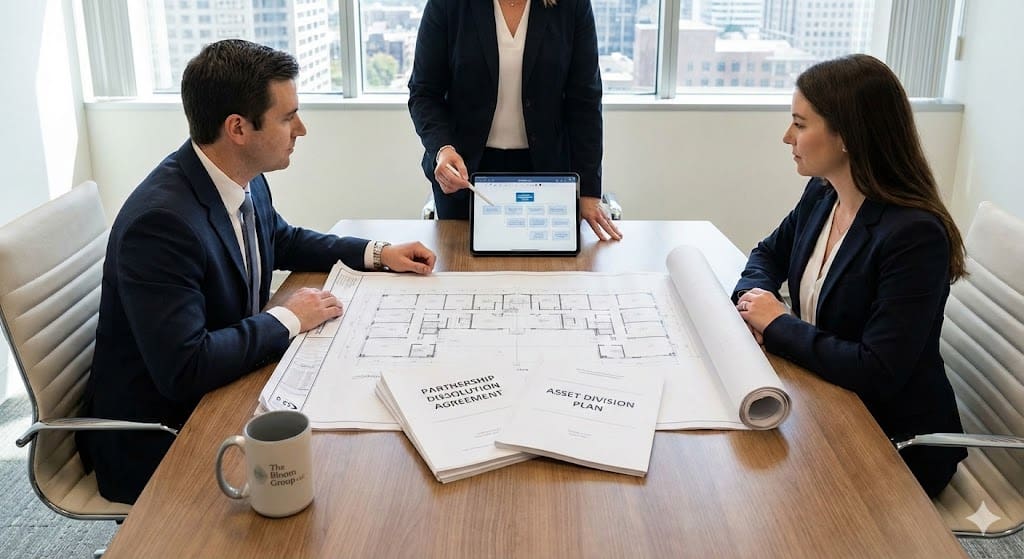
Drafting Contracts Using AI: A Business Lawyer’s PerspectiveRecently, a client called and excitedly told me he would be forming a new venture with an acquaintance to develop a product that would improve the efficiency of hydroelectric energy plants. He would be contributing a significant sum of money to the venture, and his partner would manage the day-to-day operations and also contribute intellectual property. Then he went on to tell me that he had enlisted the help of AI to write the first draft of the partnership agreement rather than have me write it, to cut down on costs. According to him, the AI-produced draft looked “pretty good,” but he wanted me to take what he characterized as a “quick look” to confirm the suitability of the draft.
Unfortunately, the draft did not look pretty good to me. There were critical elements of the intended partnership that the AI-generated contract either did not address whatsoever or addressed superficially. For example, the draft did not provide for a customized governance structure, which was necessary in light of the vastly different roles each partner would play in their partnership. Further, crucial tax considerations were not addressed. Most significantly for my client, the draft did not protect the ownership of all intellectual property the venture created.
The Benefits of Using AI to Draft Contracts
Despite what a reader might infer from the introduction, AI can be a useful tool for drafting contracts. AI can efficiently produce documents that will serve as a place to start serious review and revision. AI can also produce contract drafts more quickly than any human could. Both of those attributes mean that AI can achieve significant cost savings for a small business.
The Limitations of AI-Generated Contracts
There are at least two limitations of AI when used to generate contracts. First, to put it simply, the output of AI can only be as good as the input given to it. So, if a person attempts to create a sophisticated, detailed, and tailored draft of a commercial agreement, but fails to provide some relevant details — such as those that would produce an appropriate governance structure — then AI’s output will inevitably be disappointing.
Second, AI cannot exercise judgment, which is the essence of lawyering. The selection of which subjects to address in an agreement, which to omit, and which words to be used, are the critical elements of effective contract drafting. AI is not capable of exercising those choices.
Conclusion: There’s No Such Thing as Boilerplate
Many years ago, a mentor was challenging me over the terms I had used at the end of an agreement, those provisions that are often dismissively referred to as “boilerplate.” I tried to wave off his questions with some version of: “Don’t worry about all that; those are just boilerplate.” He looked at me and gave me a lesson that was useful then and has proved so ever since: “There’s no such thing as boilerplate.” His point was that each provision in every contract has to be tailored to the unique circumstances of the transaction the contract is meant to capture. AI simply cannot be expected to perform that function yet. AI is a useful tool to improve and reduce the cost of drafting contracts, but it is not a substitute for the exercise of a lawyer’s judgment.
If you are considering using AI to draft a partnership agreement, operating agreement, or other business contract, The Bloom Group, LLC can review the draft — or prepare one tailored to your transaction from the start. Contact us at (202) 494-3954 or peter@thebloomgroupllc.com.
This article is for general informational purposes only and does not constitute legal advice.







0 Comments